How to Cure Tonsillitis in 4 Hours: Fast Pain Relief Tips 2026
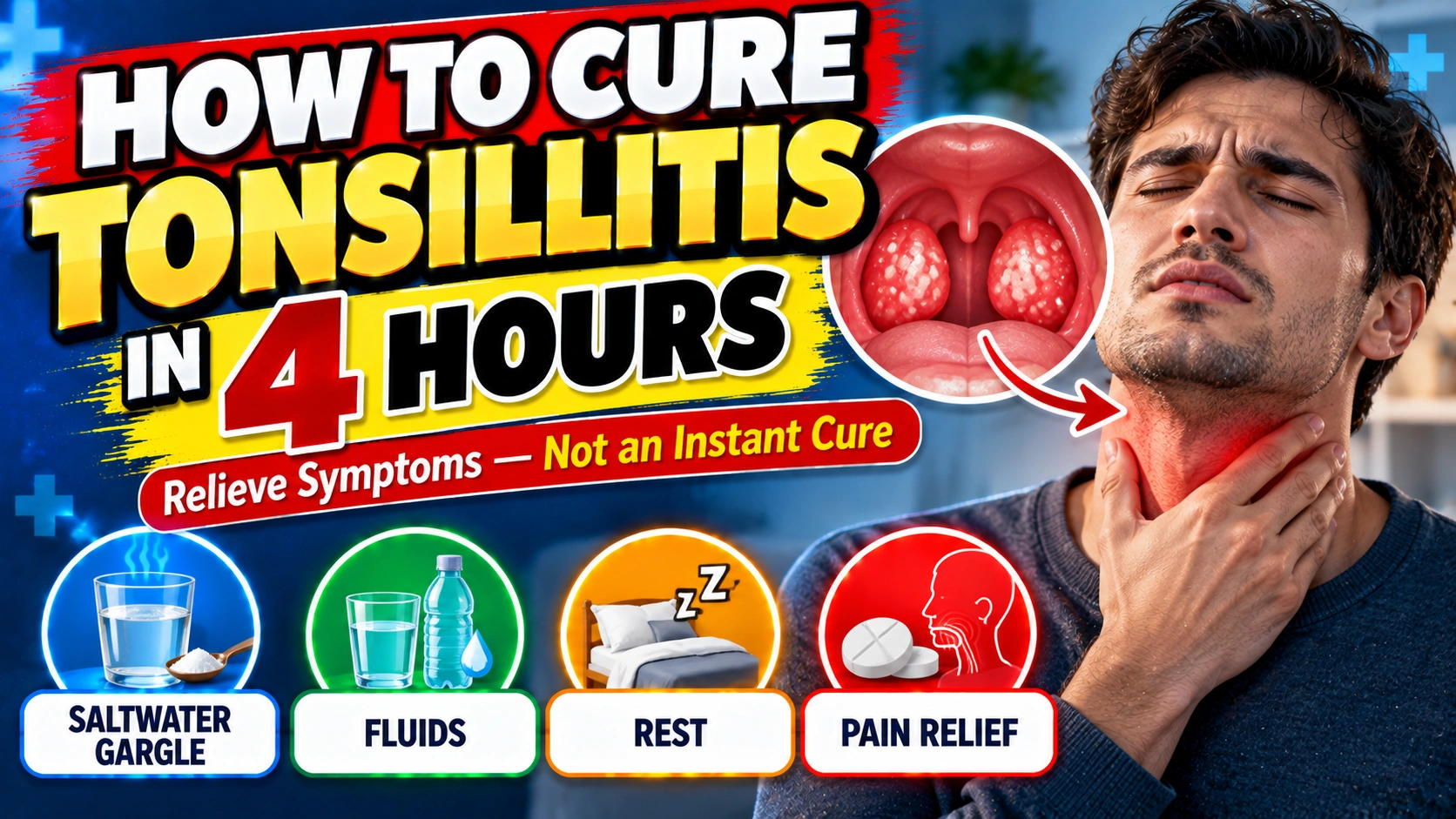
If you’re searching for how to cure tonsillitis in 4 hours, you’re probably dealing with a painful sore throat, swollen tonsils, or difficulty swallowing and want relief as quickly as possible. Tonsillitis can make eating, drinking, talking, and sleeping uncomfortable, especially when inflammation becomes severe.
Although there is no medically proven way to completely cure tonsillitis in just four hours, several treatments can help relieve symptoms within that time. Warm saltwater gargles, appropriate pain medication, hydration, and soothing foods may reduce discomfort while your body recovers.
The most effective treatment depends on whether the infection is viral or bacterial. Understanding the difference can help you avoid ineffective remedies and recognize when professional medical care is necessary.
Quick Answer
You cannot reliably cure tonsillitis in 4 hours, but you may be able to relieve throat pain and discomfort during that period. Gargling with warm salt water, drinking cool or warm fluids, resting, and taking an appropriate over-the-counter pain reliever can provide temporary relief. Viral tonsillitis usually improves on its own, while bacterial tonsillitis caused by group A Streptococcus may require antibiotics. Severe swelling, breathing difficulty, or an inability to swallow saliva requires urgent medical attention.
Tonsillitis Relief at a Glance
| Treatment | Potential Benefit | Important Information |
|---|---|---|
| Warm saltwater gargle | Soothes throat irritation | Temporary symptom relief |
| Ibuprofen | Reduces pain and inflammation | Not suitable for everyone |
| Acetaminophen | Relieves pain and fever | Follow age-appropriate dosing |
| Cool fluids | Soothes the throat and supports hydration | Does not eliminate infection |
| Warm tea with honey | May soothe throat discomfort | No honey for children under one |
| Ice chips or frozen treats | May temporarily numb soreness | Avoid choking hazards |
| Throat lozenges | Provide temporary throat relief | Not suitable for young children |
| Antibiotics | Treat confirmed or strongly suspected bacterial infection | Require medical evaluation and prescription |
These treatments do not guarantee recovery within four hours.
Can Tonsillitis Really Be Cured in 4 Hours?

No established medical treatment can guarantee complete recovery from tonsillitis within four hours.
Tonsillitis occurs when the tonsils, two masses of lymphatic tissue at the back of the throat, become inflamed. This inflammation is usually caused by a viral infection, although bacterial infections can also be responsible.
Recovery depends on the underlying cause, severity, and individual health circumstances.
Viral Tonsillitis
Most cases of tonsillitis are caused by viruses. Antibiotics do not work against viral infections.
Symptoms commonly improve over several days, although some cases take longer. Supportive care focuses on controlling pain, preventing dehydration, and allowing the immune system to fight the infection.
Bacterial Tonsillitis
Group A Streptococcus is an important bacterial cause of tonsillitis and strep throat.
When testing confirms strep throat, clinicians commonly prescribe antibiotics such as penicillin or amoxicillin, provided they are appropriate for the patient.
Antibiotics help treat the bacterial infection, reduce transmission, and lower the risk of certain complications. However, they do not instantly remove tonsil swelling or guarantee symptom resolution within four hours.
How to Relieve Tonsillitis Symptoms in 4 Hours
The following four-hour plan focuses on practical symptom relief rather than promising an unrealistic cure.
First Hour: Gargle With Warm Salt Water
A warm saltwater gargle is a simple home remedy that may soothe throat irritation.
To prepare it:
- Mix half a teaspoon of salt into a glass of warm water.
- Stir until the salt dissolves.
- Gargle gently for several seconds.
- Spit out the solution rather than swallowing it.
- Repeat as needed if it feels soothing.
The water should be comfortably warm, not hot.
Saltwater gargling does not kill the underlying infection reliably or replace medical treatment. Young children and anyone unable to gargle safely should avoid this method.
Second Hour: Manage Pain and Inflammation
Over-the-counter medications can help reduce tonsillitis-related pain and fever.
Ibuprofen is a nonsteroidal anti-inflammatory drug that can relieve pain and reduce inflammation. It may begin providing relief within the first hour, although the response varies.
Ibuprofen may be unsuitable for people with certain kidney conditions, stomach ulcers, dehydration, or other medical concerns. It also has important medication interactions and pregnancy-related restrictions.
Acetaminophen, also called paracetamol, can relieve throat pain and fever. It does not have the same anti-inflammatory effects as ibuprofen.
Follow the product’s dosing instructions and consider age, weight, medical conditions, and other medications. Avoid taking multiple products containing acetaminophen because excessive doses can cause serious liver damage.
Children and teenagers should not use aspirin for viral illnesses because of the risk of Reye syndrome.
Third Hour: Soothe Your Throat With Fluids
Hydration is particularly important when swollen tonsils make swallowing uncomfortable.
Try small, frequent sips of:
- Cool water
- Warm, non-caffeinated tea
- Clear broth
- Water with a small amount of honey
- Cold drinks that feel soothing
Warm and cold drinks can both provide comfort. Choose whichever temperature feels better.
Honey may soothe throat irritation, but it is not a proven cure for tonsillitis. Never give honey to infants younger than 12 months.
Avoid very hot beverages that could burn already irritated tissue.
Fourth Hour: Rest and Reassess Your Symptoms
Rest supports recovery, although four hours of rest will not necessarily resolve an infection.
During this period, minimize unnecessary talking, avoid cigarette smoke and vaping, and choose soft foods if you feel hungry.
Consider foods such as yogurt, oatmeal, mashed potatoes, soup, or applesauce. Avoid anything that significantly increases throat pain.
After several hours, reassess whether you can swallow fluids comfortably, whether your pain is manageable, and whether new symptoms have developed.
If symptoms worsen, especially if you develop difficulty breathing or swallowing saliva, seek immediate medical attention.
Best Home Remedies for Tonsillitis Relief
Home remedies can improve comfort while the underlying illness runs its course.
Warm Saltwater Gargles
Gargling can temporarily soothe a painful throat. It is inexpensive and generally suitable for adults and older children who can gargle safely.
However, there is insufficient evidence that gargling eliminates the infection or substantially shortens the illness.
Honey and Warm Tea
Honey can coat the throat and may reduce irritation or coughing associated with respiratory infections.
Add a small amount to comfortably warm tea or water.
Honey should not be considered an antibiotic or a substitute for prescribed treatment.
Cold Water and Ice Pops
Cold liquids and frozen treats may temporarily reduce the sensation of pain.
These can be particularly useful when swallowing warm beverages feels uncomfortable.
Choose options that are easy to swallow and avoid hard foods that could irritate the throat.
Humidified Air
A clean, cool-mist humidifier may improve comfort when indoor air is dry.
Follow the manufacturer’s cleaning instructions because poorly maintained humidifiers can spread microorganisms or irritants.
Humidification does not directly cure tonsillitis.
Throat Lozenges
Medicated or soothing throat lozenges may provide temporary relief.
Some contain local anesthetic or other active ingredients. Follow package directions and avoid combining products without checking their ingredients.
Lozenges pose a choking risk for young children.
What Causes Tonsillitis?
Understanding the cause helps determine whether supportive care is enough or medical treatment is needed.
Viral Infections
Viruses are responsible for most tonsillitis cases.
Possible causes include adenoviruses, influenza viruses, Epstein-Barr virus, and other respiratory viruses.
Symptoms may include a sore throat, fever, fatigue, swollen tonsils, and painful swallowing. Some viral infections also cause a cough, runny nose, or hoarseness.
Bacterial Infections
Group A Streptococcus can cause acute bacterial throat infections involving the tonsils.
Possible symptoms include:
- Sudden sore throat
- Fever
- Pain when swallowing
- Red, swollen tonsils
- White patches or pus on the tonsils
- Tender lymph nodes in the front of the neck
These findings can suggest strep throat, but symptoms alone cannot reliably confirm it.
A rapid strep test or throat culture may be needed. In children and teenagers, a negative rapid antigen test may require a follow-up throat culture, depending on the clinical situation.
How Long Does Tonsillitis Usually Last?
The duration depends on the cause and severity.
| Type | General Recovery Pattern | Treatment |
|---|---|---|
| Viral tonsillitis | Often improves within several days, sometimes taking about a week or longer | Supportive care |
| Group A strep tonsillitis | Symptoms may improve within 24–48 hours after appropriate antibiotics begin | Prescribed antibiotics |
| Tonsillitis associated with mononucleosis | May cause prolonged symptoms and fatigue | Supportive care and medical monitoring |
| Recurrent tonsillitis | Episodes occur repeatedly | Medical evaluation for underlying causes and treatment options |
Even when throat pain improves quickly, that does not necessarily mean the infection has cleared.
Do Antibiotics Cure Tonsillitis Faster?
Antibiotics are useful when tonsillitis is caused by susceptible bacteria, particularly group A Streptococcus.
They are not effective against viruses.
For confirmed strep throat, appropriate antibiotics can shorten symptoms, reduce bacterial transmission, and prevent certain complications.
Many patients begin feeling better within one or two days of treatment, but improvement is not guaranteed within a specific number of hours.
Take antibiotics exactly as prescribed and complete the prescribed course unless your healthcare professional advises otherwise.
Do not take leftover antibiotics or someone else’s prescription.
If symptoms worsen or do not improve after approximately 48 hours of appropriate antibiotic treatment, contact your healthcare professional for reassessment.
How to Reduce Swollen Tonsils Quickly
Swollen tonsils can make swallowing painful, but the best approach depends on the underlying condition.
For mild to moderate symptoms, an appropriate anti-inflammatory medication may help reduce discomfort and inflammation. Cold drinks, adequate hydration, and avoiding irritants may also help.
However, severe or rapidly increasing swelling needs medical assessment.
In certain clinical situations, a healthcare professional may consider a single dose of a corticosteroid to reduce severe throat symptoms. Corticosteroids are not routinely necessary for uncomplicated tonsillitis, and they should not be self-prescribed.
Attempting to scrape away white patches, squeeze the tonsils, or apply irritating substances can injure the tissue and should be avoided.
What Should You Avoid When You Have Tonsillitis?
Some habits and remedies can worsen throat irritation or delay appropriate treatment.
- Smoking and vaping: Smoke and aerosols can irritate inflamed throat tissue.
- Alcohol: Alcohol may aggravate irritation and contribute to dehydration.
- Very spicy or acidic foods: These may increase pain when swallowing.
- Excessively hot drinks: Hot liquids can burn sensitive tissues.
- Undiluted essential oils: Applying or swallowing concentrated oils can cause irritation or toxicity.
- Unnecessary antibiotics: Antibiotics do not treat viral tonsillitis and can cause adverse effects.
- Ignoring worsening symptoms: Severe or one-sided swelling may indicate a complication.
Avoid trying to force food or fluids down when swallowing is unsafe.
When Should You See a Doctor for Tonsillitis?
Most uncomplicated cases can be managed with supportive care, but certain symptoms require professional evaluation.
Arrange medical assessment if you have persistent or worsening throat pain, significant fever, difficulty drinking enough fluids, suspected strep throat, or repeated episodes of tonsillitis.
You should also seek medical advice if symptoms are not improving after several days.
Warning Signs That Need Emergency Care
Seek emergency medical attention if you experience:
- Difficulty breathing
- Inability to swallow saliva or persistent drooling
- Rapidly increasing throat or neck swelling
- Severe difficulty opening the mouth
- A muffled voice with severe throat pain or swelling
- Severe one-sided throat pain with swelling or displacement of the uvula
- Signs of severe dehydration, confusion, or marked weakness
These symptoms can indicate a serious infection or airway problem.
Can Tonsillitis Cause a Peritonsillar Abscess?
Yes. A peritonsillar abscess is a collection of pus that develops near a tonsil.
It may cause severe one-sided throat pain, fever, difficulty opening the mouth, a muffled voice, and difficulty swallowing.
This condition requires urgent medical evaluation and may need drainage and antibiotics.
Home remedies are not an appropriate substitute for treatment.
Can You Prevent Tonsillitis From Spreading?
Many infections responsible for tonsillitis are contagious.
Practical precautions include washing your hands regularly, avoiding shared drinking glasses and utensils, covering coughs and sneezes, and limiting close contact while ill.
For confirmed group A strep throat, people should generally stay home until they are fever-free and have received at least 12–24 hours of appropriate antibiotic treatment, following their healthcare professional’s advice and applicable school or workplace guidance.
For viral illnesses, return-to-activity guidance depends on the specific infection and symptoms.
Read: Kohll’s Pharmacy Hours 2026
Read: Drug Mart Pharmacy Hours 2026
Read: Jewel Pharmacy Hours 2026
Read: King Soopers Pharmacy Hours 2026
Read: Kroger Pharmacy Hours 2026
Frequently Asked Questions
Can You Get Rid of Tonsillitis Overnight?
Complete recovery overnight is not guaranteed. Pain medication, hydration, and soothing remedies may make symptoms more manageable, but the underlying infection often takes several days to resolve.
What Is the Fastest Way to Relieve Tonsillitis Pain?
An appropriate over-the-counter pain reliever, cool or warm fluids, and saltwater gargles may provide relatively quick relief. The most suitable option depends on your age, health conditions, and symptom severity.
Can Salt Water Cure Tonsillitis?
No. Warm saltwater gargles may soothe irritation but do not reliably eliminate viral or bacterial infections.
Can Tonsillitis Go Away Without Antibiotics?
Yes. Viral tonsillitis generally resolves without antibiotics. Some bacterial throat infections can also improve without treatment, but confirmed group A strep throat should be treated according to medical guidance to reduce complications and transmission.
Does Ice Cream Help Tonsillitis?
Cold, soft foods such as ice cream or frozen yogurt may temporarily soothe throat discomfort. They do not cure the infection.
Can I Take Ibuprofen for Tonsillitis?
Ibuprofen can help relieve pain and inflammation when it is safe for you to take. Follow age-appropriate product directions and consult a healthcare professional if you have kidney disease, stomach ulcers, pregnancy-related concerns, or other contraindications.
How Do I Know if My Tonsillitis Is Bacterial?
Symptoms such as fever, swollen tonsils, tender neck glands, and an absence of cough may raise suspicion for strep throat. However, a rapid strep test or throat culture is generally needed to confirm the diagnosis.
Can Tonsillitis Become Dangerous?
Yes, although serious complications are uncommon. Severe swelling, dehydration, or a peritonsillar abscess may require urgent treatment. Breathing difficulty or an inability to swallow saliva is a medical emergency.
Sources & Verification
This guide reflects established clinical guidance from the Centers for Disease Control and Prevention on group A strep throat, the National Health Service on tonsillitis and sore throat care, and general medical guidance on symptom management.
Exact recovery times cannot be guaranteed. Treatment recommendations depend on the patient’s age, medical history, infection type, and severity. Medication instructions should always be checked against current product labeling and individualized medical advice.
Before You Go
If you want to know how to cure tonsillitis in 4 hours, the most important distinction is between relieving symptoms and eliminating the infection.
Warm saltwater gargles, hydration, rest, soothing foods, and suitable pain medication may help you feel better within a few hours. However, viral tonsillitis generally requires time to resolve, while confirmed bacterial infections may need prescription antibiotics.
If you experience severe swelling, worsening pain, difficulty swallowing saliva, or breathing problems, do not wait for home remedies to work. Seek appropriate medical care promptly.